
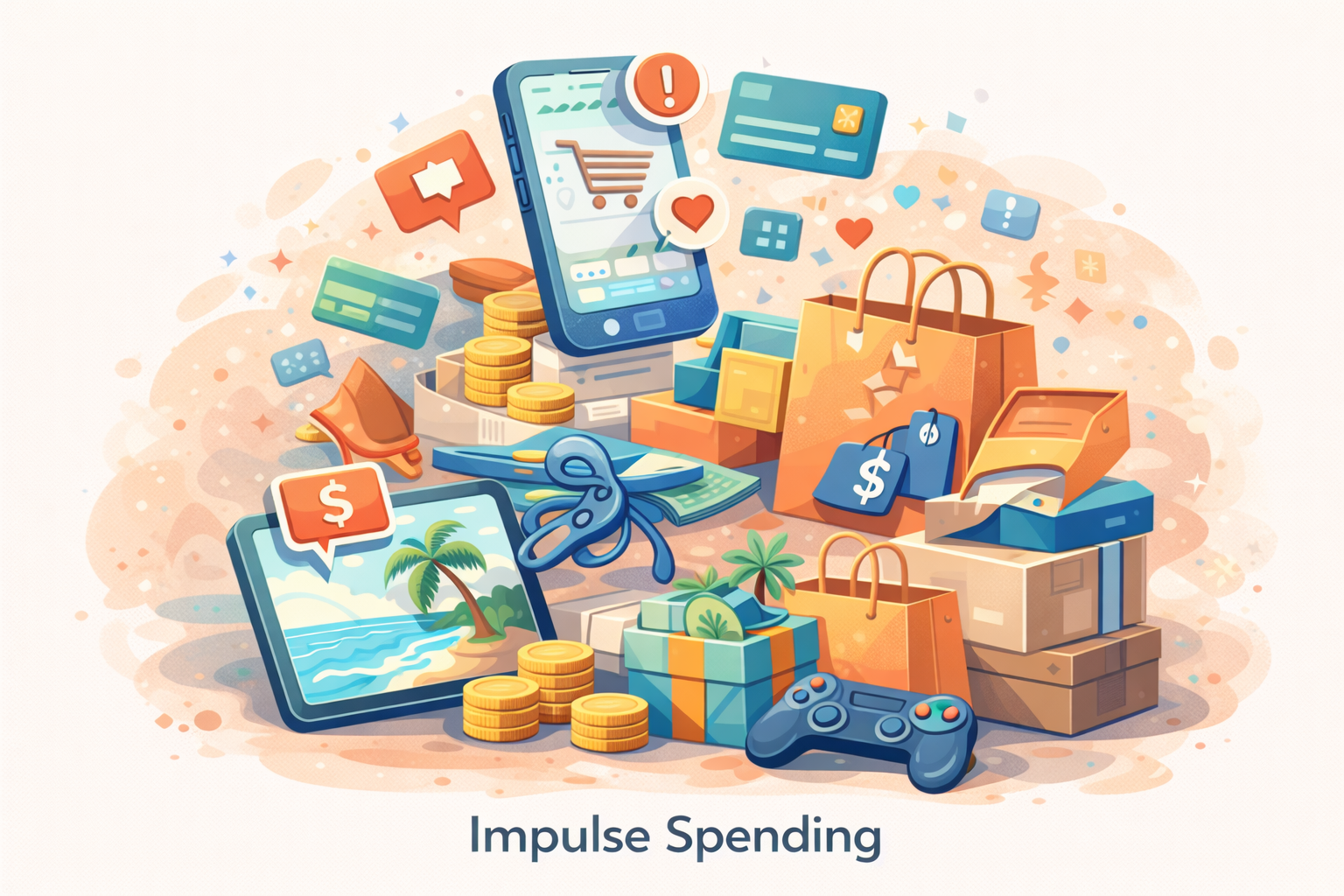
To achieve lasting financial clarity, you must first master the psychology of Impulse Spending within your 4-Quadrant System and understand how it fits into your overall financial framework. Impulse spending is not a money problem; it is a brain problem. Your mind is wired to react fast, chase comfort, and grab quick rewards long before logic can step in.
Once you understand why your brain loves to spend, you can change the way you respond to those urges. You stop feeling guilty. You stop guessing. You start seeing patterns that were invisible before. That is where the Impulse Quadrant becomes powerful. It gives you a place to track, understand, and manage the choices that used to slip through the cracks.
This article is your deep dive into the psychology behind impulse spending, and a clear guide to taking back control without shame or restriction.
This article is part of the 4-Quadrant System, a framework that organizes money into Essentials, Savings, Lifestyle, and Impulse categories to help you understand your spending without shame.
Table of Contents
1: The Real Reasons We Spend on Impulse
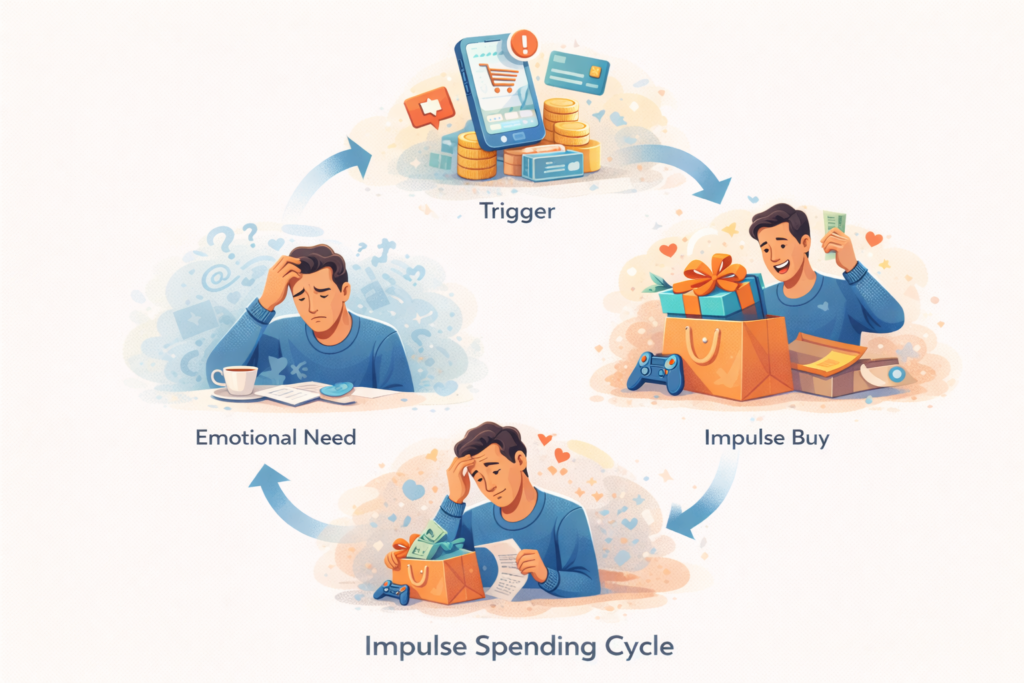
Impulse spending does not happen because you are irresponsible. It happens because your brain is built for speed, comfort, and reward. Here are the forces that drive most unplanned purchases.
1. Emotional relief.
When stress rises, the brain wants something fast that feels good. A snack, a small upgrade, a quick treat. These buys are not about the item. They are about escape. Your mind is trying to calm down, not spend money.
2. Dopamine spikes.
Novelty hits the brain like a spark. The moment you see something new or exciting, dopamine fires and logic fades. This chemical rush is powerful enough to make a purchase feel necessary, even when your rational brain disagrees.
3. Social influence.
People spend differently when they feel watched, compared, or inspired. Friends, influencers, and social feeds shape your sense of what is normal. The desire to belong, fit in, or keep up can trigger impulse buys without you realizing it.
4. Decision fatigue.
Your brain makes hundreds of choices a day. By the end of it, your ability to resist impulses is weak. When you are tired, stressed, or overwhelmed, the brain wants the fastest reward, not the smartest choice.
5. Marketing engineering.
Brands know exactly how to trigger impulses. Limited time offers, perfect lighting, seamless checkout flows, targeted ads, and emotional messaging are all engineered to push you toward “yes” before you can think.
These reasons show something important. Impulse spending is not about failure or weakness. It is biology, psychology, and environment working together. Once you understand these forces, you can start to take control of them.
2: The Lessons Hidden Inside Your Impulse Purchases
Impulse spending is not random. Every unplanned buy carries a signal about your life, your emotions, and your unmet needs. When you look closely, your impulses turn into insight. Here are the lessons they reveal.
1. What you buy tells you what you try to escape.
Comfort food points to stress. Online shopping points to boredom. Convenience purchases point to exhaustion. Your impulse buys are not about the product. They are about the feeling you are trying to fix.
2. Your biggest triggers appear at the same times or locations.
Maybe your weak spot hits late at night. Maybe it is payday. Maybe it is after work or during boredom scrolls. Triggers repeat. When you see the pattern, you can prepare for it instead of falling into it.
3. Patterns in impulse spending reveal emotional habits.
Some people buy when they are stressed. Others buy when they are excited. Some buy when they feel lonely. Your pattern shows you how your emotions and money are connected, and where your habits start to drift.
4. Impulse purchases expose where you need structure, not shame.
A messy impulse pattern does not mean you lack discipline. It means your brain needs clearer boundaries. Small guardrails often solve the problem better than guilt ever will.
5. The things you regret most show you what you truly value.
The purchases that sting the most are usually the ones that clash with your long term goals. Regret is feedback. It shows you what matters and what does not.
Your impulse spending is a map. When you read it with curiosity instead of judgment, you learn exactly how to take back control.
3: How the Impulse Quadrant Brings Clarity and Control
Impulse spending becomes a problem when it hides in your budget. The Impulse Quadrant fixes that by giving these purchases a home of their own. Once you separate impulses from everything else, the patterns become clear and easier to control. Here is why it works.
1. It removes guilt and replaces it with awareness.
When impulse buys have their own category, you stop treating them like failures. You look at them as data. Awareness gives you power. Guilt just keeps you stuck.
2. It makes impulses visible instead of hiding them.
Most people do not realize how often or how quickly small purchases add up. The Quadrant reveals the truth. Seeing the pattern is the first step to changing it.
3. It keeps impulse spending separate from lifestyle joy.
A planned hobby purchase is not the same as a late night scroll buy. Mixing the two creates chaos. Separating them lets you enjoy lifestyle spending without letting impulses run wild.
4. It creates boundaries without feeling restrictive.
The Impulse Quadrant does not tell you to stop spending. It simply gives you a limit. Boundaries make you feel in control, not deprived. Giving impulse spending its own place also protects enjoyment. When impulses are separated from intentional fun, the Lifestyle Quadrant becomes more satisfying instead of stressful.
5. It helps you stop small leaks before they become big problems.
Impulse spending rarely hits in big amounts. It drains you through constant drips. The Quadrant exposes those drips so you can patch them early.
The Impulse Quadrant works because it brings your impulses into the open. Once you can see them clearly, you can control them confidently.
4: Lessons for Mastering Your Impulse Spending
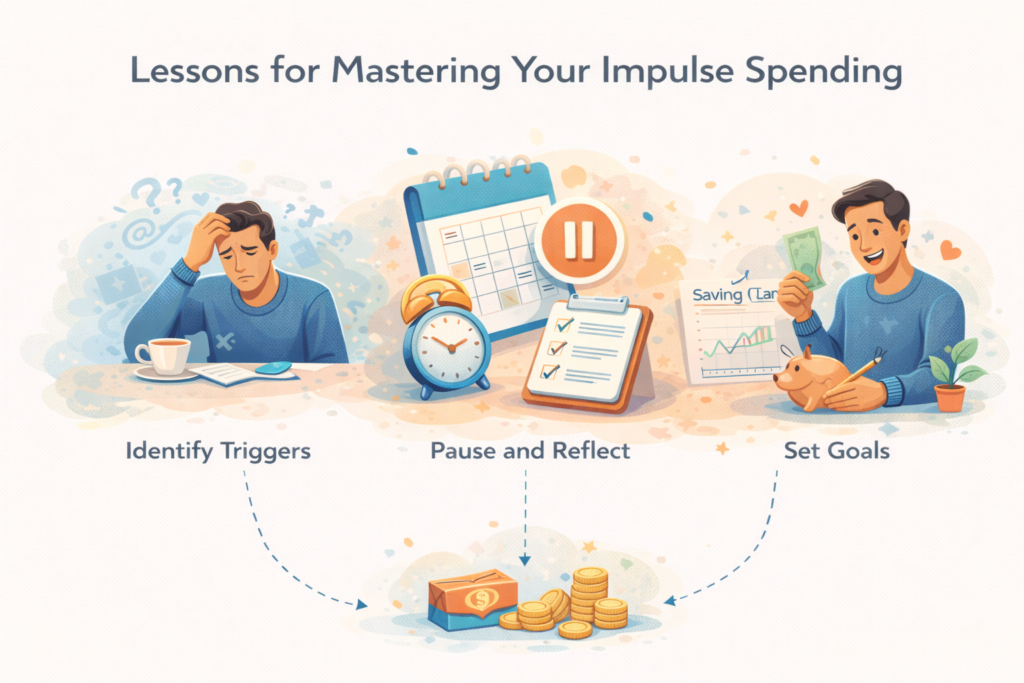
You cannot shut off your impulses. You can only learn how to work with them. Mastery comes from awareness, structure, and preparation, not from trying to be perfect. These lessons help you build control that actually lasts.
1. You cannot eliminate impulses, but you can manage them.
Your brain will always crave quick rewards. The goal is not to shut down the urge. It is to channel it. When impulses have a home in your system, they stop derailing your progress.
2. Creating small guardrails protects your money long term.
A simple weekly limit. A separate spending card. A pause rule before purchases. Small boundaries make a big difference. They keep impulses light instead of letting them snowball.
3. Noticing patterns is more powerful than fighting urges.
Fighting impulses drains your energy. Understanding them gives you control. Once you see your common triggers, you can adjust your environment instead of battling your brain.
4. Preparing for weak moments works better than resisting in the moment.
If your danger zone is late-night scrolling, plan for it. If your trouble spot is after work, adjust for that. Preparation beats willpower every time.
5. Treating impulse spending as part of your system removes shame.
Impulses are normal. Everyone has them. When you include impulse spending inside a structured quadrant, the shame disappears and the clarity rises. Shame hides problems. Structure solves them.
These lessons give you the tools to understand your impulses, work with them, and keep your financial life steady even when your brain wants a quick hit of excitement.
5: What Life Looks Like When You Understand Your Impulses
When you finally understand your impulses, your relationship with money shifts in a real, noticeable way. Spending becomes something you control, not something that controls you. Here is what life looks like when your impulses stop running the show.
1. You recognize your triggers before they hit.
You notice the patterns. You know the moments when your guard is low. Instead of reacting, you anticipate. That alone cuts impulse spending more than any budget ever could.
2. Your spending feels intentional, not chaotic.
You know what belongs in Lifestyle spending and what belongs in the Impulse Quadrant. You make choices instead of guesses. Your money has direction instead of drift.
3. You enjoy fun purchases without guilt.
You stop treating every treat like a mistake. When impulse spending has boundaries, you get the reward without the regret. Fun becomes fun again.
4. You stop confusing impulse wants with lifestyle wants.
Your system separates the two. Lifestyle wants are planned joys. Impulse wants are quick hits. When you know the difference, you protect your long term happiness without denying yourself the short term now and then.
5. You build stability because your leaks stop leaking.
Most financial stress comes from small, frequent drips. Once you understand and manage your impulses, those drips close. Your savings grow. Your expenses level out. Your confidence rises.
Understanding your impulses does not make you perfect. It makes you aware. And awareness is what gives you true control.
Conclusion
Impulse spending becomes far less powerful when you understand why it happens in the first place. Once you see the patterns, the triggers, and the emotional habits behind your choices, money starts to feel clearer and much easier to manage. The Impulse Quadrant gives you a system built on awareness instead of shame. It turns hidden urges into visible signals and helps you make decisions you actually feel good about.
If you want to take control of your impulses, start simple. Track one week of your purchases and label every impulse buy. That single action will show you more about your habits than months of guessing. From there, the Quadrant System will help you shape your spending, understand your mind, and take back control one choice at a time.
Next Step
Once you understand your impulses, explore how redirecting small leaks can strengthen the Savings Quadrant over time.