
Mastering your Essential Spending is the foundation of money organization, ensuring that your 4-Quadrant System remains stable and predictable. Essential spending is where real life happens—rent, food, bills, transport, and debt payments. These costs show up every month whether you feel prepared or not, making it vital to have a clear structure in place.
When essential spending is unmanaged, finances feel tight even with a decent income. Bills feel stressful. Planning feels impossible. Not because you are doing something wrong, but because fixed costs demand structure, not willpower.
The Essential Quadrant exists to bring clarity and stability to the costs you cannot avoid. It helps you understand what truly counts as essential, organize those expenses properly, and reduce the pressure they create.
This guide will show you how to manage essential spending in a way that keeps your life running smoothly while giving you back a sense of control.
This article is part of the 4-Quadrant System, a framework that organizes money into Essentials, Savings, Lifestyle, and Impulse categories to make finances clearer and easier to manage.
Table of Contents
1: What Essential Spending Really Is?
Essential spending covers the costs that keep your life functioning at a basic level. These are not upgrades or preferences. They are requirements.
Essential spending includes:
- Food and groceries
Regular purchases that fuel daily life and repeat every week. - Toiletries and daily consumables
Soap, toothpaste, cleaning supplies, and household basics that quietly add up over time. - Rent or mortgage
The largest fixed cost for most people and the anchor of the entire budget. - Utilities and internet
Electricity, water, gas, phone, and internet. These are no longer luxuries. They are infrastructure. - Transport and fuel
Costs required to commute, run errands, and maintain daily mobility. - Insurance
Health, vehicle, home, or life insurance that protects you from financial shocks. - Loan EMIs and minimum debt payments
Fixed obligations once debt exists. Missing them increases stress and long term cost. - Basic home maintenance
Repairs and upkeep that prevent larger, more expensive problems later.
Key lesson:
Essential spending is not optional. These costs do not wait for motivation or perfect planning. When essentials are unmanaged, they create constant pressure, instability, and the feeling that money is always tight.
The Essential Quadrant is not about eliminating these costs. It is about organizing them so they stop overwhelming you.
2: Why Essential Spending Feels Overwhelming for So Many People
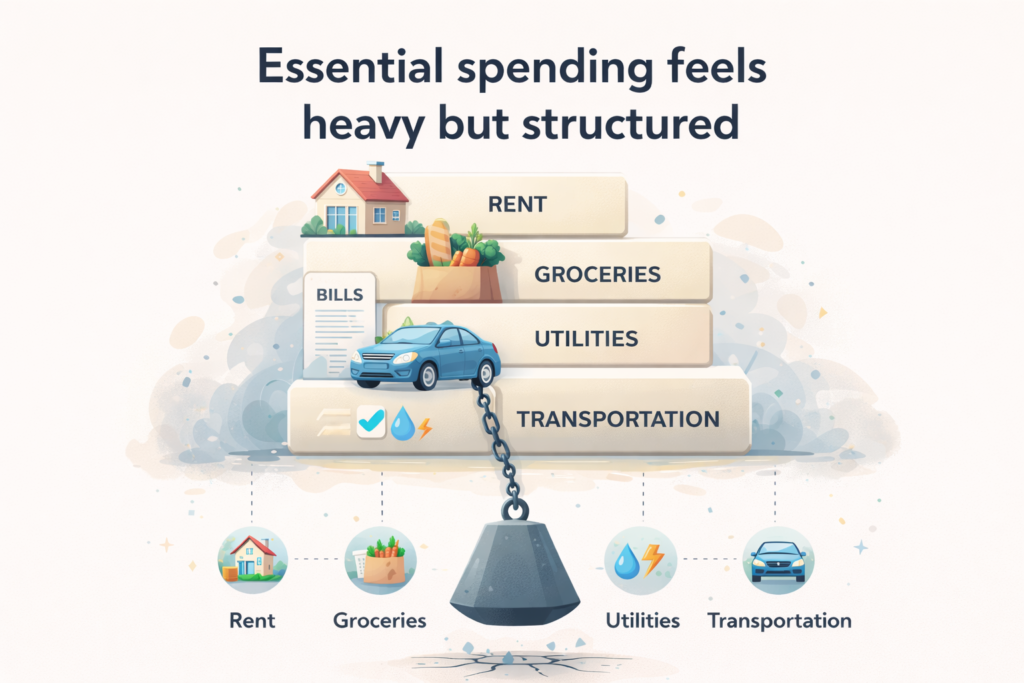
Essential spending feels heavy not because people are careless, but because of how these costs behave. These reasons explain why essentials create stress across all income levels.
1. Most essential costs are fixed or semi-fixed.
Rent, utilities, insurance, and EMIs do not adjust easily when income fluctuates. This rigidity creates pressure.
2. Essential expenses are spread across many small payments.
Groceries, fuel, and consumables feel harmless individually, but together they form a major outflow.
3. Bills arrive on different dates.
When payments are scattered across the month, it becomes hard to see the full picture. Money feels unpredictable.
4. People underestimate “invisible essentials.”
Subscriptions, maintenance, refills, and minor repairs often go unnoticed until they pile up.
5. One disruption breaks the whole system.
A medical bill, repair, or missed payment can throw everything off balance when essentials are not structured properly.
Key insight:
Essential spending becomes overwhelming when it is unstructured. The pressure is not caused by the costs themselves, but by the lack of visibility and organization around them.
3: The Biggest Mistakes People Make With Essential Spending
Most essential spending problems do not come from lack of income. They come from small structural mistakes that compound over time. These are the most common ones.
1. Treating all essentials as one lump sum.
When everything is grouped together as “bills,” nothing feels clear. Fixed costs, variable costs, and irregular essentials blur into one stressful number, making planning difficult.
2. Ignoring small recurring costs.
Groceries, fuel, toiletries, and refills feel minor in isolation. Over a month, they become a major outflow. When these are not tracked properly, money disappears without explanation.
3. Mixing essential spending with lifestyle spending.
Dining out counted as groceries. Subscriptions treated as utilities. This confusion inflates essential costs and makes it feel like you have no room to breathe.
4. Paying bills reactively instead of systematically.
When bills are paid as they appear, money feels chaotic. Missed dates, late fees, and constant checking create unnecessary stress.
5. Not planning for irregular essentials.
Annual insurance, repairs, school fees, or medical costs are essential, but often ignored until they hit. When these are not planned for, they feel like emergencies even when they are predictable.
Key lesson:
Essential spending becomes overwhelming when it is managed reactively instead of intentionally. These mistakes do not mean you are bad with money. They mean your essentials need structure.
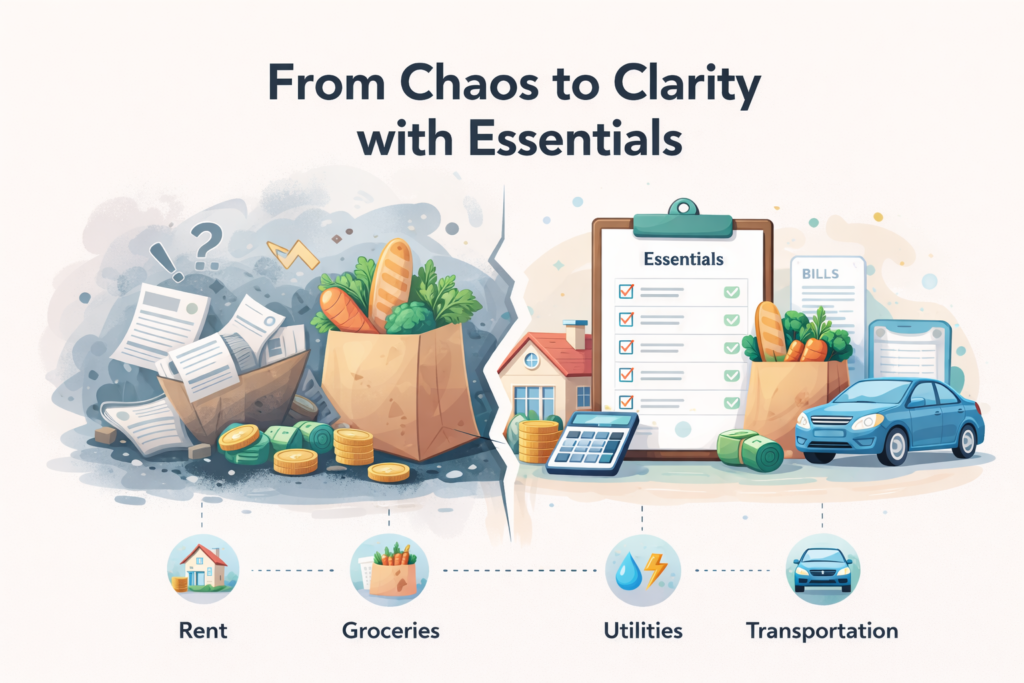
The Essential Quadrant exists to replace chaos with clarity and pressure with predictability.
4: How to Build a Strong Essential Quadrant
A strong Essential Quadrant does not eliminate pressure overnight, but it replaces chaos with clarity. These steps help you turn unavoidable costs into something predictable and manageable.
1. List every essential cost, fixed and variable.
Write everything down. Rent, utilities, groceries, fuel, insurance, EMIs, maintenance, consumables. If it keeps your life functioning, it belongs here.
2. Separate monthly, weekly, and irregular essentials.
Some costs repeat weekly, some monthly, some once or twice a year. Separating them stops irregular expenses from feeling like emergencies.
3. Calculate your baseline “survival number.”
Add up the minimum required to cover essentials for one month. This number shows what your life truly costs before lifestyle or savings.
4. Align bill dates with income timing.
When possible, shift payment dates so major bills follow income, not precede it. This reduces short-term cash pressure.
5. Build small buffers for variable essentials.
Groceries, fuel, and utilities fluctuate. Adding a small margin prevents constant shortfalls and last-minute stress.
A stable Essential Quadrant also makes saving possible. When your basics are predictable, it becomes much easier to direct money toward the Savings Quadrant without feeling stretched or unsafe.
6. Automate what must never be missed.
Rent, EMIs, insurance, and utilities should run automatically. Automation here protects stability, not convenience.
7. Review essentials quarterly, not daily.
Essential spending changes slowly. A quarterly review is enough to adjust costs, renegotiate bills, or plan for upcoming increases.
Key outcome:
When essentials are structured this way, they stop feeling like a constant threat. You gain predictability, breathing room, and a clearer view of what is truly affordable.
The Essential Quadrant does not reduce your responsibilities. It makes them easier to carry.
5: What a Healthy Essential Quadrant Gives You
When your Essential Quadrant is structured properly, the impact reaches far beyond your bills. Life feels steadier. Decisions feel clearer. Money stops feeling like a constant emergency.
1. You gain predictability instead of anxiety.
You know what needs to be paid, when it needs to be paid, and how much it will cost. Fewer surprises mean fewer panic moments.
2. Your finances become easier to manage, even when income fluctuates.
When essentials are mapped clearly, changes in income are less destabilizing. You understand your minimum needs and can adjust other areas without confusion.
3. You stop confusing survival costs with lifestyle choices.
Essentials stay protected. Lifestyle decisions become intentional instead of reactive. This separation alone reduces guilt and stress.
4. Financial shocks feel smaller and more manageable.
Irregular essentials are no longer emergencies. Buffers and planning absorb the impact instead of derailing your entire month.
5. Every other quadrant becomes easier to manage.
Savings feel achievable. Lifestyle spending feels safer. Impulse spending becomes easier to control. A strong Essential Quadrant supports the entire system.
Key takeaway:
Financial stability does not come from cutting life down to nothing. It comes from organizing what must exist. When essential spending is clear and structured, money stops feeling like a constant fight and starts feeling manageable again.
Conclusion
Essential spending is not the enemy of financial freedom. It is the foundation of it. When the costs that keep your life running are unclear or unmanaged, everything else feels fragile. When they are organized, predictable, and visible, pressure drops and confidence rises.
The Essential Quadrant is not about cutting corners or living with less than you need. It is about understanding what your life actually costs and building a system that supports it. Once essentials are structured, money stops feeling like a constant emergency and starts feeling manageable.
Start today by mapping your Essential Quadrant. List every cost that keeps your life functioning, fixed and variable. Separate monthly, weekly, and irregular expenses. That one exercise will give you more clarity and stability than most budgeting tools ever will.
When essentials are under control, everything else in your financial life becomes easier to build.
Next Step
Once your essential spending feels clearer, explore how this fits into the full 4-Quadrant System and see how the other quadrants support long-term stability.